














Media Education Needs a Reset: Freddy Singaraj on Preparing the Next Generation for a Changing Media Landscape
Mithibai College BAMMC head Freddy Singaraj says media schools must shift from teaching tools to building critical thinkers, with live-client projects.


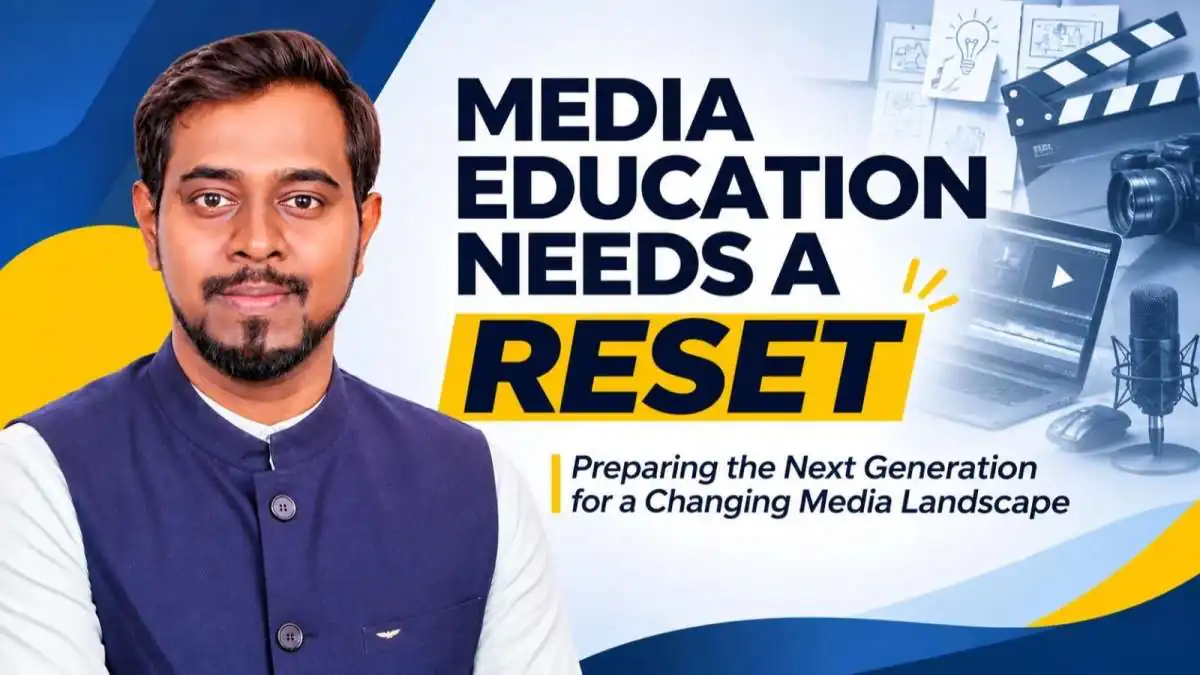

As artificial intelligence, digital platforms and emerging technologies continue to reshape the media industry, an important question confronts media educators: Are we preparing students for the media industry of tomorrow, or simply training them for the industry of yesterday?
Freddy Singaraj, Head of the Department of Bachelor of Arts in Multimedia and Mass Communication (BAMMC) at SVKM's Mithibai College, believes media education needs a fundamental shift; one that places creative thinking, adaptability, critical understanding and practical industry exposure at the centre of learning.
With professional experience spanning media, public relations, social media and advertising, alongside over nine years in academia, Singaraj brings an industry-informed perspective to the evolving relationship between education and media practice.
According to him, the challenge before media educators is no longer limited to teaching software, production techniques or communication theories. It is about developing individuals who can think critically, understand audiences, recognise emerging trends and use technology meaningfully.
"The media industry is evolving faster than traditional academic structures can sometimes respond. Our responsibility as educators is not simply to teach students how to operate tools, but to help them understand why they are using them, what they are creating and how their work influences the world around them, " he says.
Bridging Industry Expectations with Academic Learning
A key aspect of Singaraj's approach is integrating professional industry practices into academic assessments. He believes internal assessments should extend beyond conventional examinations and classroom assignments, giving students opportunities to experience real-world creative processes and professional expectations. At Mithibai College, this approach is reflected through project-based assessments that
simulate industry workflows. Students collaborate with live clients to conceptualise and develop print advertisements and billboard campaigns, taking projects from understanding the brief and creative ideation to final execution. Similarly, filmmaking assignments follow professional production methodologies, requiring
students to experience the different stages of filmmaking, including pre-production, scripting, production, editing and final delivery.These projects help students understand client expectations, audience requirements, creative problem-solving, production planning, deadlines, teamwork and professional presentation.
"Students need to experience what it means to work on a brief, understand a client's expectations, defend a creative decision and deliver a finished product. Academic assessments should not just test what students know, but also demonstrate how effectively they can apply that knowledge," says Singaraj.
The objective is to bridge the gap between theoretical learning and professional practice while enabling students to develop practical competencies, confidence and portfolios that reflect their creative capabilities.
Rethinking Creativity in the Age of Technology
With artificial intelligence and digital production tools becoming increasingly accessible, Singaraj believes creative thinking and conceptual understanding are more important than ever.
While technical skills remain essential, students must also learn to question information, understand communication ethics, interpret visual narratives and create meaningful stories across platforms.
He also advocates interdisciplinary learning, where media intersects with technology, psychology, business, culture and design.
"Tomorrow's media professional may not fit into a single job description. The boundaries between advertising, journalism, design, content creation and technology are increasingly fluid. Education must reflect that reality," he observes.
As India's digital landscape and creator economy continue to expand, the demand for professionals who combine creative ability with critical thinking and technological awareness is becoming increasingly relevant.
For Singaraj, the future of media education is not about predicting which platform, software or technology will dominate next. It is about preparing students to remain relevant even as tools, platforms and industry practices evolve.
The real objective of media education should not simply be to create skilled media operators, but thoughtful communicators, responsible creators and adaptable professionals who can translate ideas into meaningful work.
ABOUT FREDDY SINGARAJ
Freddy Singaraj is a media educator and communication professional serving as the Head of the Department of Bachelor of Arts in Multimedia and Mass Communication (BAMMC) at SVKM's Mithibai College, Mumbai. With over nine years of academic experience and a professional background spanning public relations, social media and media communication, his areas of interest include media education, advertising, visual communication, digital media, branding and emerging technologies.
His approach to education focuses on bridging academic learning with professional industry practices through experiential, project-based assessments, live-client assignments, creative campaigns and industry-oriented production workflows.
He is particularly interested in exploring how evolving media technologies and creative practices can reshape communication, learning and the future of the media industry.
Media Contact
Email: freddysingaraj@gmail.com
LinkedIn: https://www.linkedin.com/in/freddy-singaraj/